I have always drawn cartoons, though I only began to understand what it meant to be a cartoonist in high school. My uncle Skipper was a country cartoonist who made holiday cards for our family and quick doodles for the local newspaper. I did not set out to follow in his footsteps, but somewhere along the way I began making birthday cards, pick-me-up doodles, and the occasional horrendously done portrait that was just bad enough to be neither portrait nor caricature. For a long time, I saw my work as entertainment, often gag drawings for campus newspapers like The Dartmouth, pieces for student comedy groups, stickers for Winter Carnival, and illustrations for presentations. Though some of my cartoons were also for myself, using them to decode the world, all the anxieties, strange interactions, and the oddities of people I ran across.
During my junior year at Dartmouth, as a Leslie Center for the Humanities Fellow, I was introduced to the Applied Cartooning Lab, where I learned about the role of cartoons in humanities work. That same year I ended up being hired to illustrate a travelog. Although these were separate experiences, together they let me see my drawings function, not just as a hobby, but as a direct medium of communication.
This realization continued into my senior year, after spending the previous term working as a librarian in Cape Town. There, I worked with students in third through seventh grade and built literacy workshops around drawing and visual storytelling. I often pulled from Roald Dahl’s books, using his characters and exaggerated worlds as access points for visual storytelling. In many learning environments, picture books were dismissed as elementary and graphic novels as leisure reading. Much of my work involved trying to counter that stigma. I used cartoons to break down texts, map story structure, and invite students to reinterpret scenes through drawing. Whether in art class, at lunch, or during a lesson, cartoons became a bridge between languages, between students and stories, and between imagination and comprehension. Now, working at CCS in the Lab, I feel excited to be among people who have dedicated their lives to this work. Conversations with collaborators, alumni, and even folks you would least imagine to be interested in cartoons, like medical faculty who deeply value cartoons, have expanded my understanding of what applied cartooning can be. As someone who hopes to teach after graduation, I continue to learn that cartoons are highly pedagogical, engaging, and imaginative in their impact.
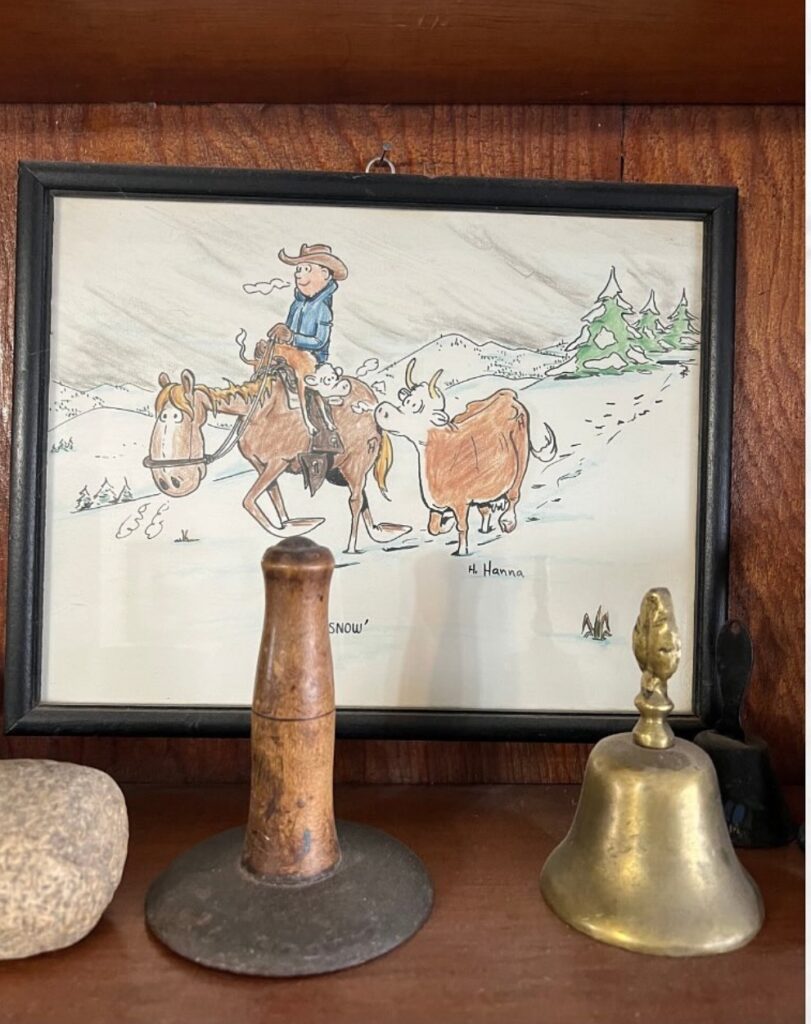
An original cartoon by Grace’s uncle, Skipper.