Noah Jodice, Applied Cartooning Fellow, 2025-26
In February, I made my way back to CCS for a visiting artist talk, trading my new home in the sunny Sonoran Desert for the comforts of snow and longjohns. I built the trip as a two-week mini “residency,” attending classes, working on an upcoming book project, and digging into some applied cartooning work.
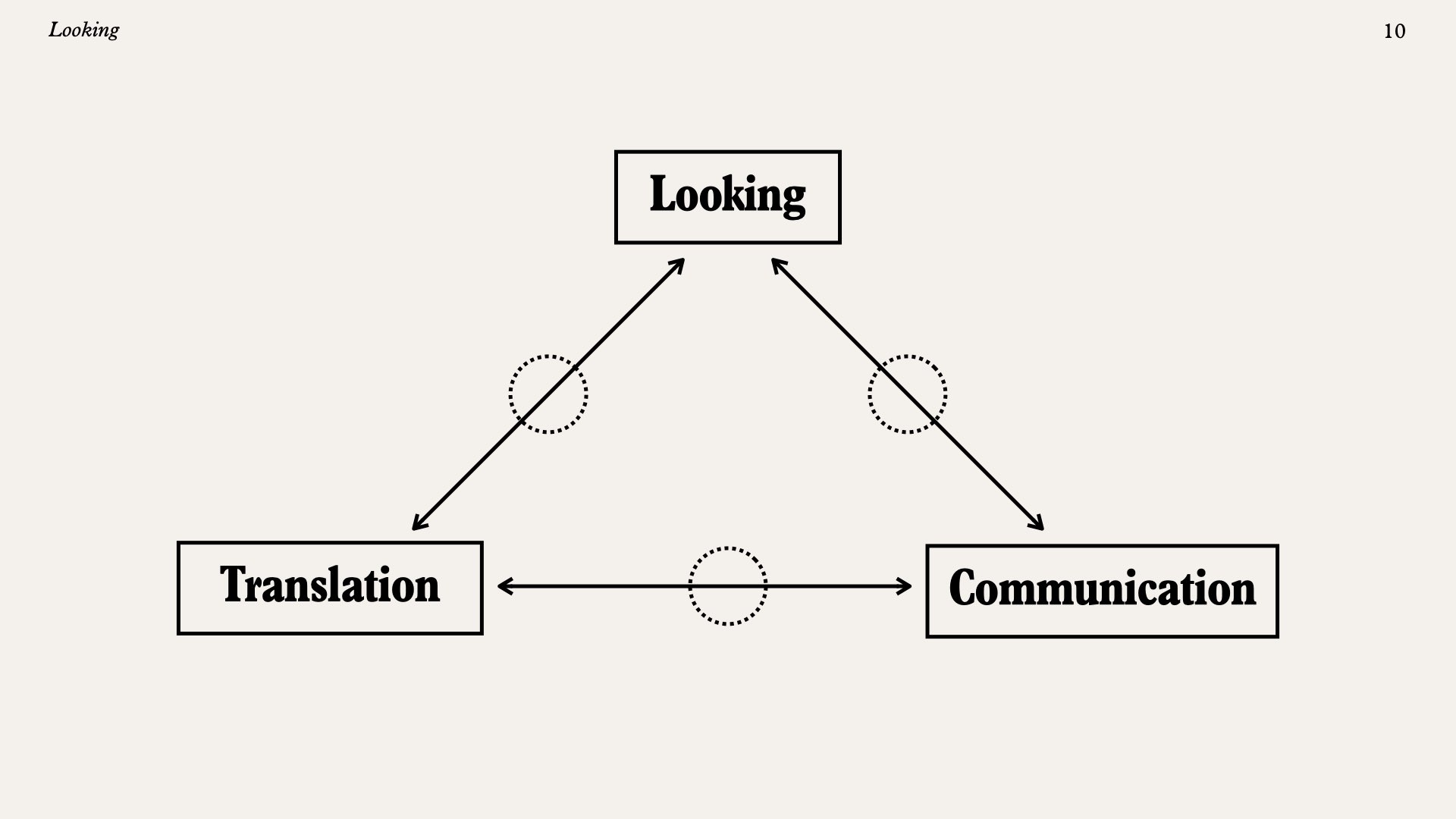
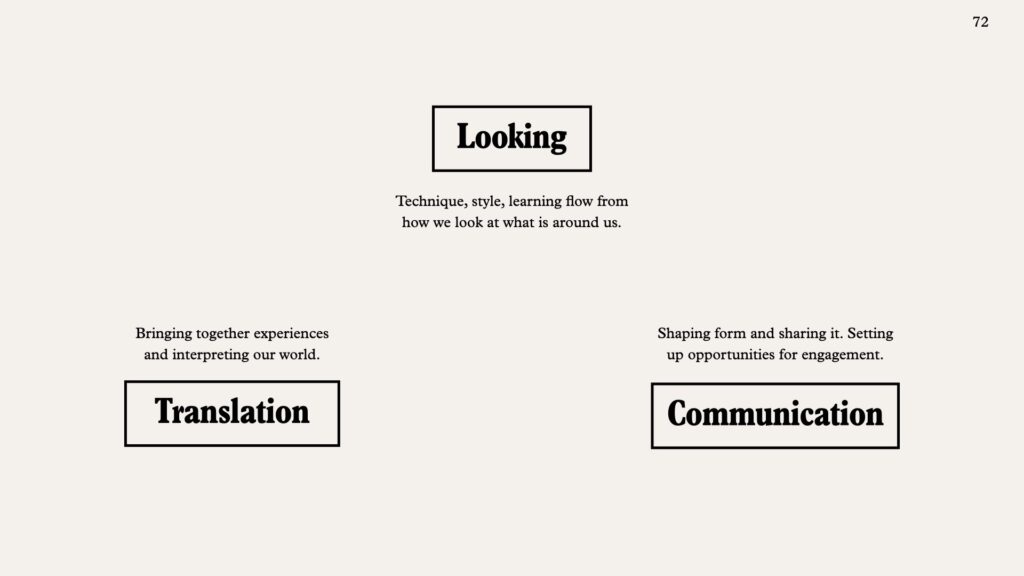
My visiting artist talk described my process of applied cartooning and the challenge of finding a niche for myself in the cartooning world. In the talk, I describe my process as three inter-related parts: Looking, translation, and communication. Each exists in relationship to the others and it is the friction between them that interests me. Creative friction can be challenging or frustrating, but it can also be productive. Friction can help us understand how our work operates and how we can more intentionally shape our creative process.
“Looking” is about establishing what we value, through gathering together ideas and experiences. John Berger, whose section of my bookshelf is constantly expanding, writes that “We only see what we look at. To look is an act of choice. As a result of this act, what we see is brought within our reach.” The creative fiction here may be the choice to look more closely and the discomfort that comes from trying to understand a complex system.
“Translation,” then, is the process of shaping ideas and experiences. The goal of translation is to shorten the gap between the idea in your head and the idea received by a viewer. As an applied cartoonist, my job is to clarify and amplify information gathered either by myself or by those around me. Between looking and translation, there are the frictions of collaboration and of accuracy — How will your voice fit in with others? how detailed and exact will you be? For me, the friction of collaboration is more productive than any other.
“Communication,” to me, is about choosing a form that suits your content, or content that suits the form. The job is not merely to make something look nice: It is to shape the content through the form. When I collaborate on applied cartooning projects, I love getting in the room at the very start, before the shape of the project has been determined. I talk with stakeholders about their concerns, their goals, and their creative frictions. In this way, the project becomes a solution for their particular community, a comic with a distinct purpose and audience.
What’s important to me is that these three parts are not necessarily linear. Over the course of a project, I often flow between them alongside collaborators. We shift from questions of form and content to the problems of print production to determining what is outside the scope of our project’s lens.
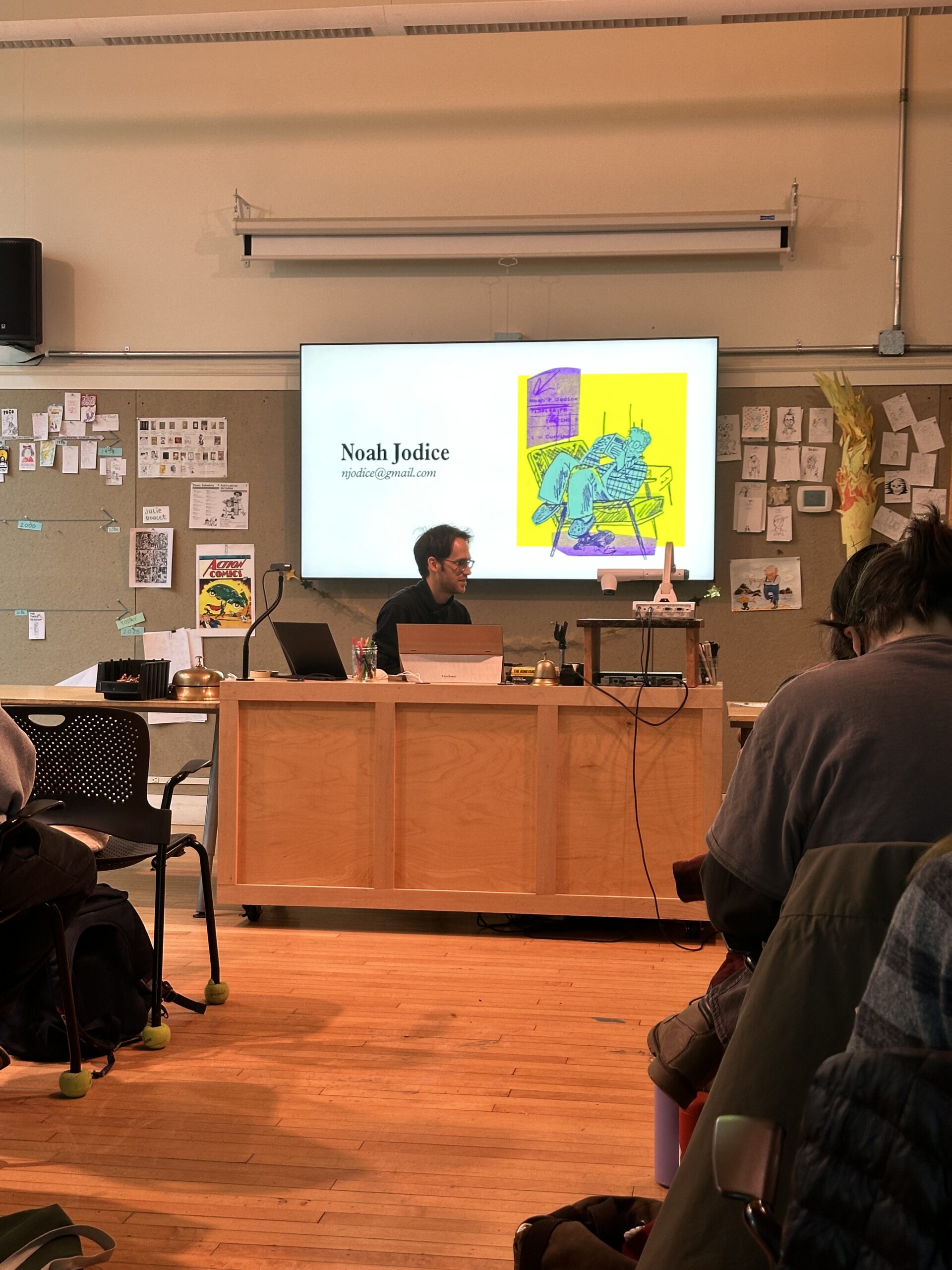
Top: Photo by Jarad Greene, of my Visiting Artist talk.
Middle: Slides from my talk, illustrating the productive frictions between Looking, Translation, and Communication.
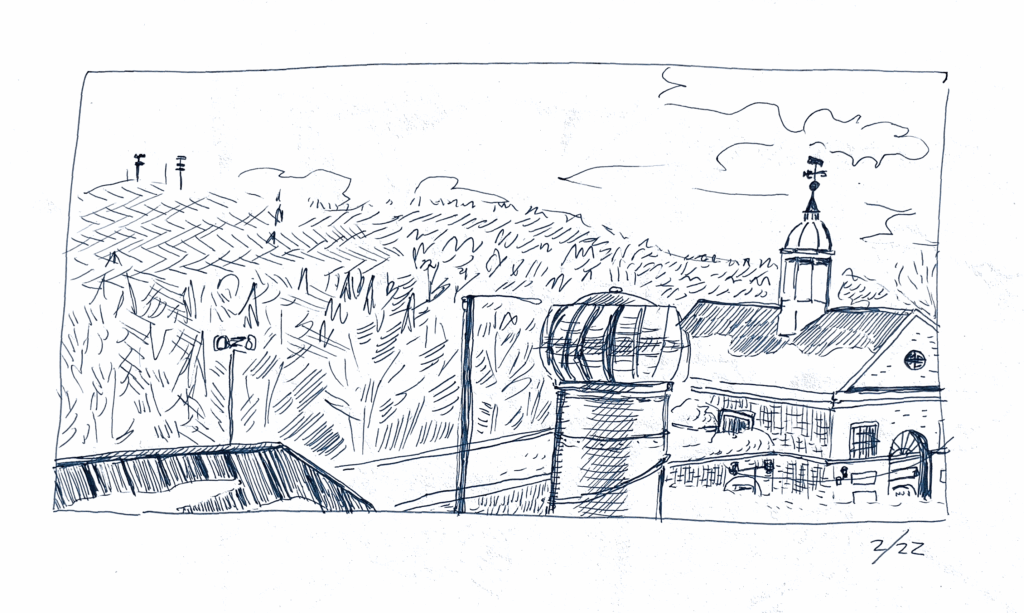
Bottom: A sketch from my workspace at the top of the Post Office building, looking out over the rail depot.