by Noah Jodice
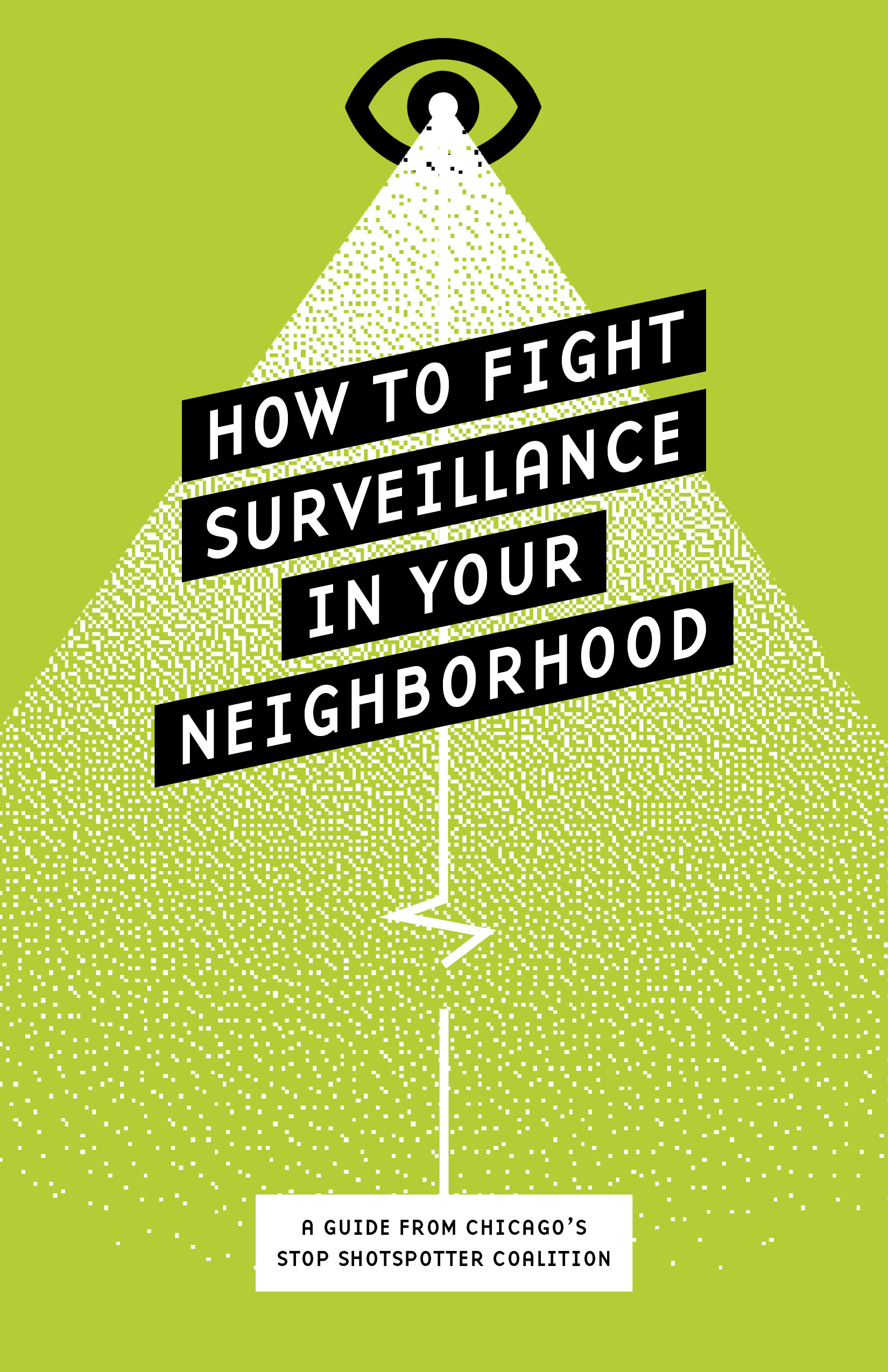
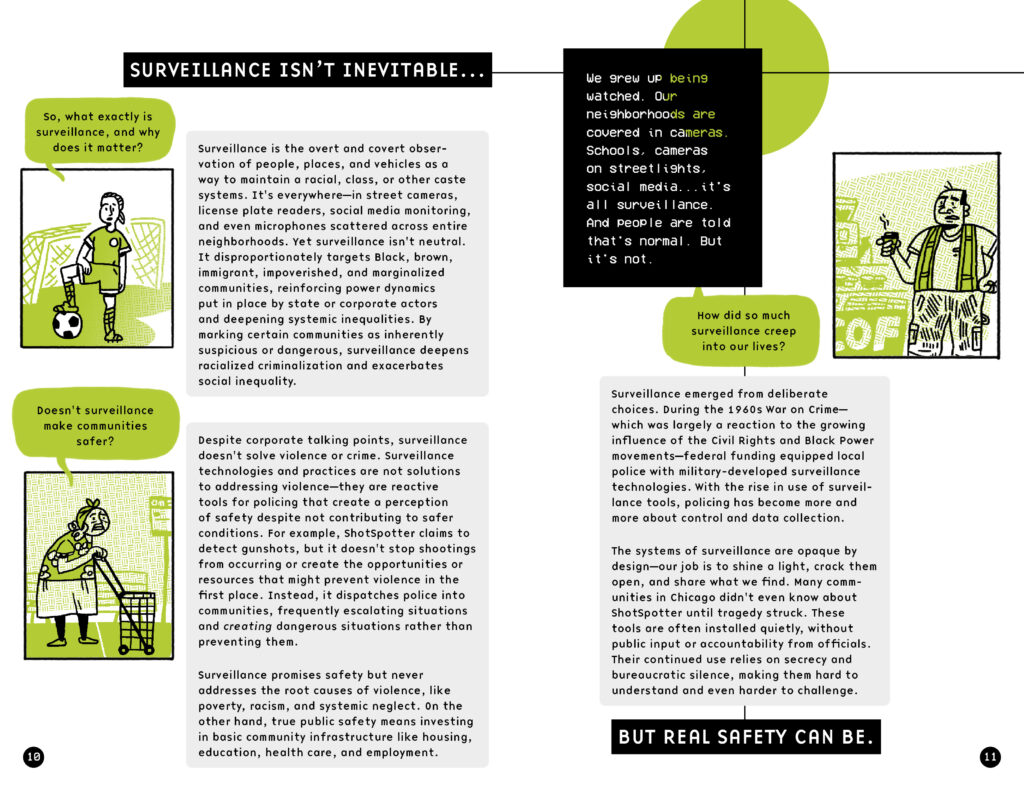
My latest applied cartooning project is part of a series that archives and reflects on the work of grassroots campaigns. “How to Fight Surveillance in Your Neighborhood” is a zine archiving the work of Chicago’s Stop Shotspotter Coalition. The project combines oral history, comics, and infographics, telling the story of the coalition’s work to end the city of Chicago’s use of ShotSpotter—an audio surveillance technology that promises to make communities safe, but, instead, triggers false alerts, escalates police encounters, and deepens the criminalization of Black and brown communities. In 2024, after years of grassroots organization, the coalition won: the city ended its contract with ShotSpotter. Now, they’re taking their fight to defund ShotSpotter nationwide, where the technology still operates in cities across the country.
This guide is my second time around on Building Beyond Policing’s “How We Did That” series. I was excited to reunite with the team from our first project, which shared lessons from an Oakland coalition’s work to defund the Urban Shield program. For both projects, Lenea Sims wrote the text, based on interviews she conducted with coalition members. Design was headed up by Megan Magray and I handled the cartooning. Hena Khairzadeh and Ashley Rumber took care of the project management side of things.
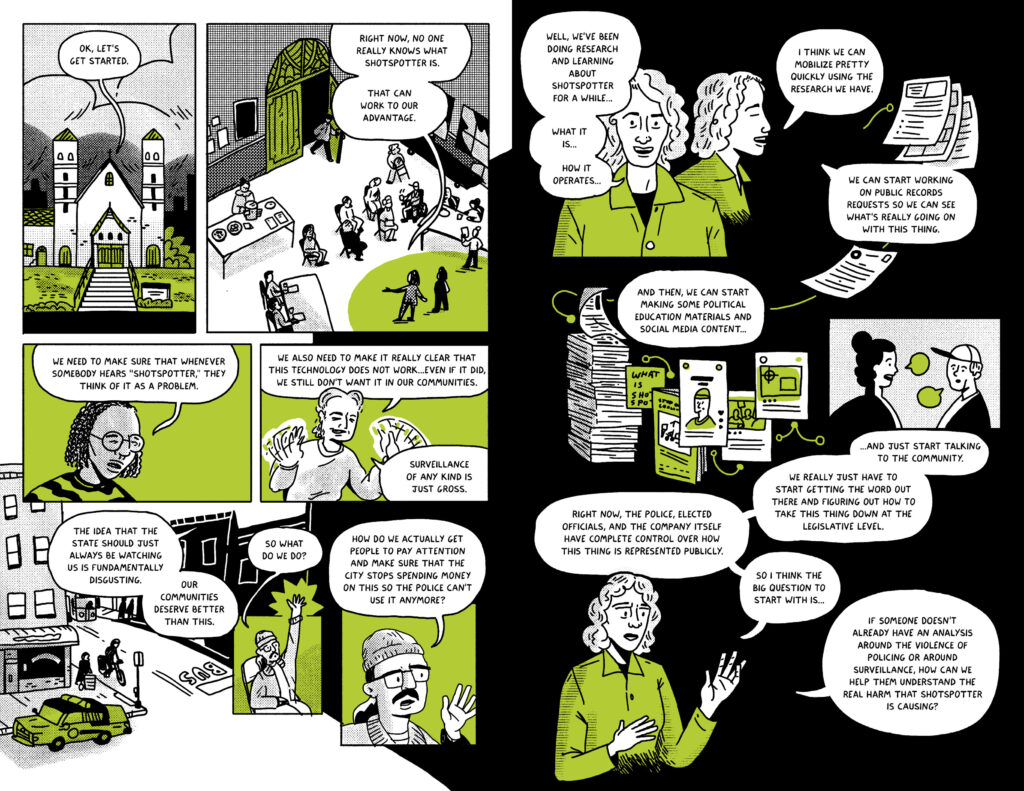
On the cartooning side of things, my challenge was to visualize and clarify the complex, winding process of creating change in a community. I used Lenea’s interviews as a starting point, focusing on the visual details of locations around the city of Chicago. I wanted to ensure that the comics reflected the experience of organizing in the city, from neighborhood meetings in church basements to chilly mornings canvassing the neighborhood.
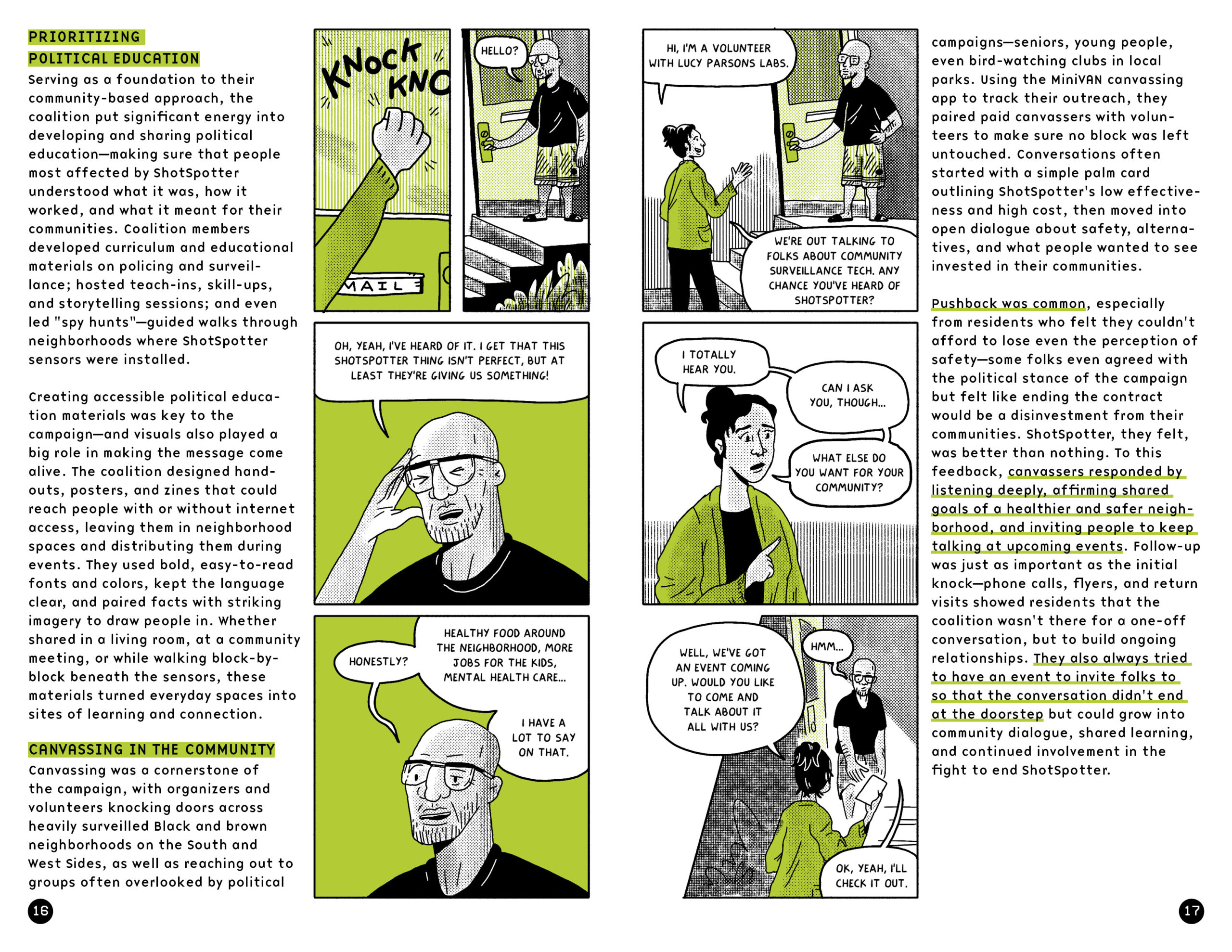
One of the great advantages of comics in this project is that we could visualize the conversations that coalition members had when canvassing in the community. Model conversations are a great tool for organizers building a new campaign, who may be unsure of how to start talking to their neighbors about thorny policy issues. The coalition would start by asking questions like, “what does safety mean to you?” or “what else do you want for your community?” These questions led community members to open up their imaginations, rather than get stuck in the options that tech companies were selling to their city.
More importantly, guides like this show how a campaign’s demand to end a harmful program can simultaneously build grassroots support for a community-oriented vision of safety. “How to Fight Surveillance in Your Neighborhood” is at the print shop now and will soon be distributed across Chicago and throughout Building Beyond Policing’s network of coalition partners.